

Articles >
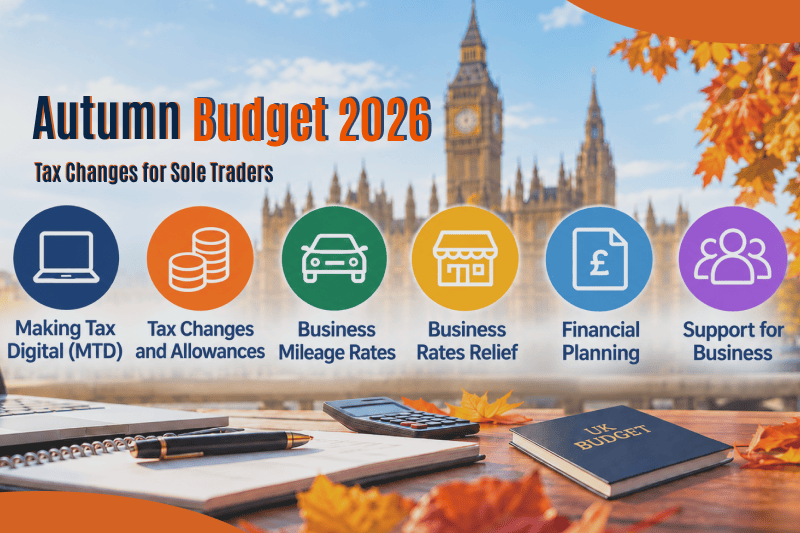
Autumn Budget 2026 Tax Changes for Sole Traders
November 13, 2026
The Autumn Budget 2026, presented on 28 October 2026, changes five things for sole traders. The Trading Allowance rises to £3,000 from 6 April 2027. Mileage above 10,000 miles rises to 35p per mile. Making Tax Digital for Income Tax reaches those with income over £30,000, with no late-submission penalty points on quarterly updates in 2027-28. The £2,500 employment expenses threshold goes in April 2028. Payments on Account become more regular from April 2029.
Most of these still need to be legislated in Finance Bill 2026-27, so details may change. For the wider Budget picture, see our guide for landlords, sole traders and small businesses.
Table of Contents
- Trading Allowance Rises to £3,000
- Higher Mileage Rate Above 10,000 Miles
- Making Tax Digital with a penalty easement
- Employment expenses threshold removed from April 2028
- Payments on Account become more regular from April 2029
- What has not changed
- Key dates
- Frequently asked questions
1. Trading Allowance Rises to £3,000
From 6 April 2027, the Trading Allowance increases from £1,000 to £3,000, and the Self-Assessment trading income reporting threshold rises with it. If your gross trading or miscellaneous income is covered by the allowance, you do not need to declare it or pay tax on it. Read our guide on Self Assessment for sole traders for more details.
If your actual expenses are higher than the allowance, you can deduct the expenses instead.
Worked Example. Olivia sells handmade candles online and earns £2,800 in a year with £500 of costs. Under today’s £1,000 allowance, her income is above the limit, so she must report it. She claims the allowance and is taxed on £1,800. If she has already used her Personal Allowance elsewhere and is a basic rate taxpayer, that is about £360 of Income Tax. In 2027-28, the same £2,800 falls under the £3,000 allowance, so she has nothing to declare and nothing to pay.
Who should still file. If your costs are above £3,000, claiming actual expenses may leave you better off. You should also keep filing if you have other income that requires a return, such as property income or capital gains.
2. Higher Mileage Rate Above 10,000 Miles
The 55p rate for the first 10,000 business miles, introduced for 2026-27, becomes permanent. From 6 April 2027, the rate above 10,000 miles rises from 25p to 35p. It applies to the self-employed simplified mileage rates and to employee mileage payments.
Worked example. A mobile engineer drives 14,000 business miles in a year.
| Today | From 6 April 2027 | |
|---|---|---|
| First 10,000 miles at 55p | £5,500 | £5,500 |
| Next 4,000 miles | £1,000 at 25p | £1,400 at 35p |
| Total claim | £6,500 | £6,900 |
That is £400 more in deductible costs. Motorcycle rates are not part of this change.
Practical point. For drivers over 10,000 miles, simplified mileage becomes more competitive against actual costs. Compare both methods once for your vehicle before choosing, because you generally need to stay with the method you pick for that vehicle.
3. Making Tax Digital with a penalty easement
Making Tax Digital for Income Tax has applied since 6 April 2026 to those with qualifying income above £50,000. The next group joins on 6 April 2027. It covers sole traders and landlords with qualifying income above £30,000 in 2025-26. The threshold falls to £20,000 from April 2028.
Qualifying income is gross self-employment and property income before expenses. A sole trader turning over £32,000 with £14,000 of costs is therefore, in scope, even though profit is only £18,000.
HMRC will not apply late-submission penalty points to quarterly updates for 2027-28 for this group. You must still send the updates before you file your tax return, and the easement does not cover the year-end return or late payment.
Quarterly update deadlines. Updates are due by 7th of August, November, February, May of each year.
Practical point. Use the easement year to build the habit. Choose compatible software, keep digital records from 6 April 2027, and get a clean routine in place before penalty points apply from 2028-29.
4. Employment expenses threshold removed from April 2028
From 6 April 2028, the £2,500 threshold that forces employees to use Self-Assessment to claim non-reimbursed employment expenses will be removed. More claims can be made through PAYE.
This matters if you have a job alongside your business. Some people file a return only to claim employment expenses, and that reason is set to disappear.
5. Payments on Account become more regular from April 2029
Payments on Account currently arrive in two large instalments, in January and July. From April 2029, taxpayers who make them will pay more regularly during the year. The government has said legislation will follow and the detailed design is still to come.
Cash-flow example. If your annual tax bill is around £6,000, setting aside £500 a month from now means the move to regular payments will not change how you budget.
What has not changed
Income Tax and National Insurance thresholds remain frozen until April 2031, so more of your profit can fall into higher bands over time. From 6 April 2027, property income is taxed at 24%, 44%, and 49% in England, Wales and Northern Ireland, which affects sole traders who also let property. The Business Asset Disposal Relief lifetime limit falls from £1 million to £500,000 for disposals from 6 April 2027. A proposed Founders’ Relief remains under consultation until 30 November 2026.
Key dates
| Date | Change | Status |
|---|---|---|
| 6 April 2027 | Trading Allowance and reporting threshold rise to £3,000 | To be legislated |
| 6 April 2027 | Mileage above 10,000 miles rises to 35p | Announced |
| 6 April 2027 | MTD for Income Tax opens to income over £30,000 | Announced |
| 6 April 2028 | £2,500 employment expenses threshold removed | Announced |
| April 2029 | More regular payments replace Payments on Account | Legislation to follow |
Frequently asked questions
- Do I still need to file a return if I earn under £3,000 from self-employment? From 6 April 2027, you may not need to, if the allowance covers all your relevant income. Other income, such as property or capital gains, can still require a return.
- When does the 35p mileage rate start? On 6 April 2027, for business miles above 10,000. The 55p rate for the first 10,000 miles continues.
- Who joins Making Tax Digital in April 2027? Sole traders and landlords with gross qualifying income above £30,000 in the tax year 2025-26.
- Will I get penalty points for late quarterly updates in 2027-28? Not if you join in April 2027. The easement does not cover the year-end return or late payment.
- Are these changes law yet? Not all of them. Several still need to be legislated in Finance Bill 2026-27.
Need Help Understanding the Latest Tax Changes?
If you are close to the £3,000 or £30,000 limits, or unsure which mileage method suits you, our team can review your position. We work with sole traders in Croydon, South London, and across the UK.
Get in touch for a quick consultation.
Sources. HM Treasury Budget 2026; HMRC Overview of Tax Legislation and Rates, 28 October 2026; CIPP and Lewis Silkin Budget 2026 summaries.
This article is general information, not tax advice. It reflects Budget announcements as at 5 November 2026. Measures may change before they become law.