

Articles >
How to Stay Tax Compliant as an Online Seller?
July 10, 2026
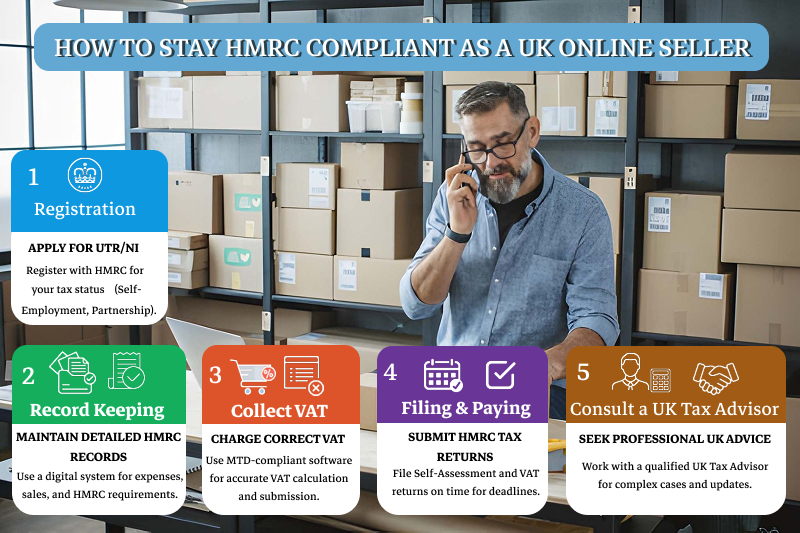
Individuals and businesses selling online in the UK, whether through platforms like eBay, Etsy, Amazon, or your own website comes with clear tax responsibilities. Staying compliant with HM Revenue & Customs (HMRC) is essential to avoid penalties, maintain accurate financial records, and build a sustainable business.
1. Understand Your Tax Obligations
In the UK, most online sellers operate as sole traders when starting their businesses. This means your business profits are taxed through self-assessment, which includes Income Tax and, if applicable, National Insurance contributions. If your turnover grows or you form a limited company, your obligations will change.
You must register for Self-Assessment with HM Revenue & Customs if your trading income exceeds £1,000 in a tax year or if you are operating as a business. Once registered, you’ll need to submit a yearly tax return reporting your income and expenses.
2. Register for VAT if Required
If your taxable turnover exceeds the UK VAT threshold (currently £90,000 in 12-months), you must register for VAT. Once registered, you’ll need to charge VAT on eligible sales, issue VAT invoices, and submit VAT returns regularly.
Even if starting their businesses are below the threshold, you may choose to register voluntarily, especially if you sell mainly to VAT-registered businesses, as this can allow you to reclaim VAT on business expenses.
3. Keep Accurate Financial Records
Good record-keeping is essential for tax compliance. You should track:
- All sales income from online platforms
- Business expenses such as packaging, shipping, advertising, and software
- Marketplace fees and commissions
- Refunds and returns
These records must be kept for at least five years after the Self-Assessment deadline. Digital accounting tools can help simplify this process and reduce errors.
4. Separate Personal and Business Finances
Opening a dedicated business bank account is strongly recommended. Mixing personal and business transactions can make it difficult to calculate profits accurately and may raise concerns during an HMRC review. A separate account ensures clarity and simplifies bookkeeping.
5. Understand Allowable Expenses
You can reduce your taxable profit by claiming allowable business expenses. Common deductions for online sellers include:
- Website hosting and domain fees
- Packaging and shipping costs
- Online advertising and marketing
- Equipment such as computers or cameras (if used for business)
- Software subscriptions and marketplace fees
Only expenses that are “wholly and exclusively” for business use can be claimed.
6. File Tax Returns on Time
If you are self-employed, you must file your Self Assessment tax return annually. The key deadlines are:
- 5 October: Register for Self-Assessment (if new)
- 31 October: Paper tax return deadline
- 31 January: Online tax return submission and tax payment deadline
Missing deadlines can result in automatic penalties and interest charges, so it is important to plan ahead.
7. Stay Compliant with Digital Tax Rules
The UK government is gradually introducing Making Tax Digital (MTD) requirements, which will require many businesses to keep digital records and submit tax updates using compatible software. Staying updated on these changes ensures you remain compliant as rules evolve.
Tax compliance is a vital part of running an online business in the UK. By registering correctly with HMRC, keeping accurate records, understanding VAT rules, and filing returns on time, you can avoid penalties and focus on growing your business confidently and legally.
FAQ: Tax Compliance for Online Sellers
1. Do online sellers need to pay taxes?
Yes. Most online sellers must pay income tax on profits and may also need to register for VAT depending on turnover and location rules.
2. How do I track my taxable income?
Keep accurate records of all sales, expenses, platform fees, and refunds using accounting software or spreadsheets to calculate true profit.
3. When should I register for VAT?
In the UK, VAT registration is required if taxable turnover exceeds the threshold set by HMRC within 12-months.
4. What expenses can I claim as an online seller?
You can usually claim costs like packaging, shipping, marketplace fees, advertising, software, and a portion of home office expenses.
5. Do I need to file taxes if I sell part-time?
Yes. Even part-time or side income from online selling must be reported if it exceeds allowable tax-free limits.
6. Can an accountant help with online seller taxes?
Yes. An accountant can help with tax filing, compliance, VAT registration, and identifying deductions to reduce your tax burden legally.
To get help 📞Contact us today: 020-8239-4999 Or 📧 Email at dhruv@doshiaccountants.co.uk , We will be happy to assist you.